PI: Una Kim Miller
Assistant Professor, Earth & Atmospheric Sciences, Cornell University
📬 umiller [at] cornell.edu
We use moorings, uncrewed systems, and satellites to study the physics of the ocean, spanning air–sea interaction, boundary-layer turbulence, ice–ocean interactions, and polar and subpolar overturning circulation. Our work aims to improve understanding of the processes that shape Earth’s climate and supply oxygen to the deep ocean.
📬 umiller [at] cornell.edu
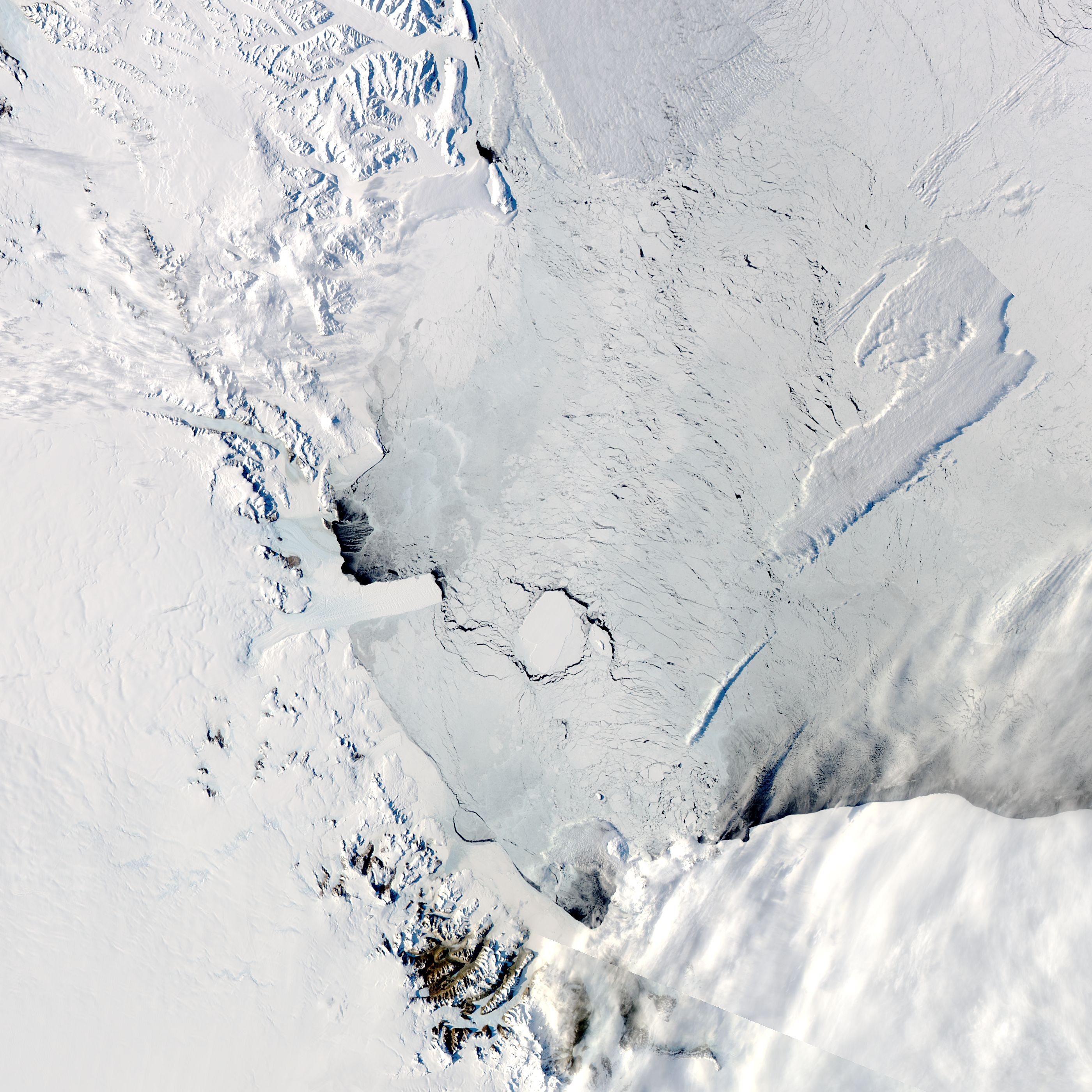
In the marginal seas of Antarctica, polynyas (openings in the sea ice) form dense shelf waters that constitute Antarctica Bottom Water, a water mass that fills the lowest kilometer of the world's oceans and brings oxygen and anthropogenic carbon to the deep ocean. We use oceanographic moorings, satellites, and BGC-Argo floats to explore the formation of and variability in dense shelf water formation.
See related papers in
Nature Comm and
Deep Sea Research II
on the Terra Nova Bay Polynya.
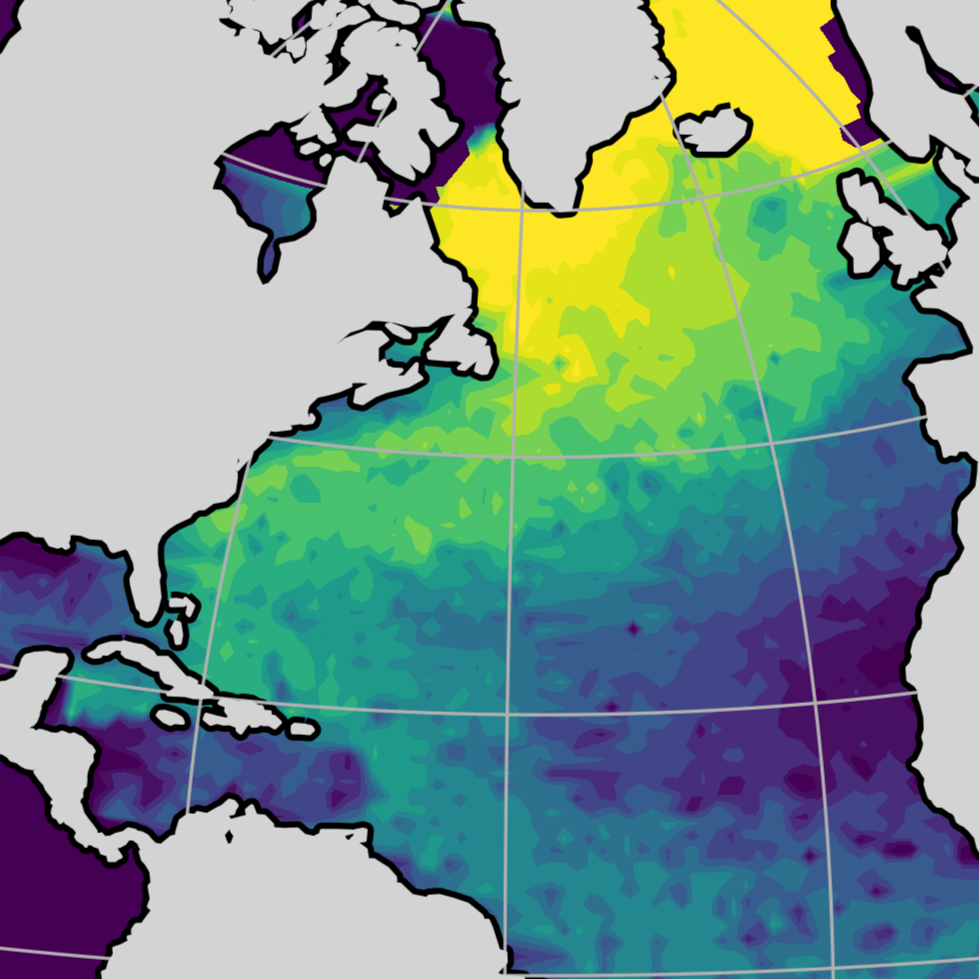
Deep convection in the Labrador Sea forms a cold, high-oxygenated water mass that fills the lower limb of Atlantic Meridional Overturning Circulation. Una is involved in GOHSNAP , an ongoing effort to instrument the Overturning in the Sub-polar North Atlantic Program (OSNAP) mooring array in the Labrador and western Irminger Sea with oxygen sensors to quantify the role of the Labrador Sea in ventilating the Atlantic Ocean interior.
See related paper on oxygen optode calibration in
Frontiers in Marine Science
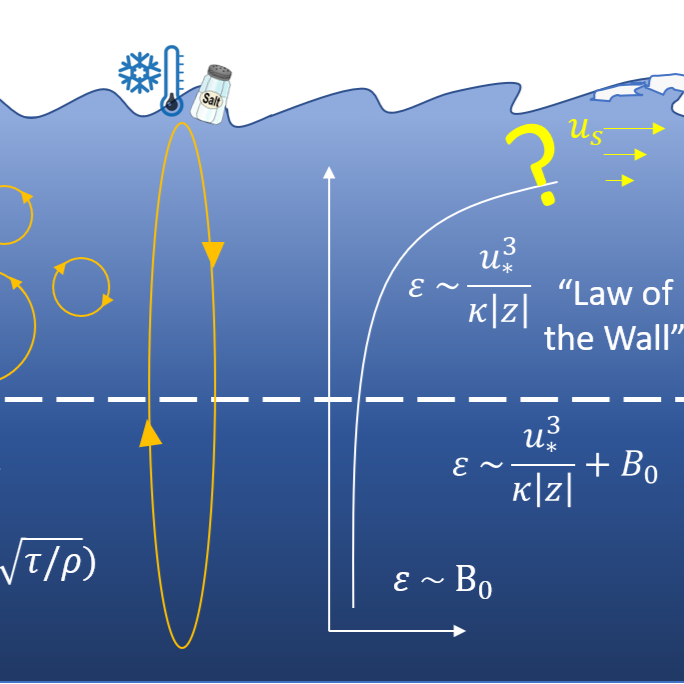
Turbulent mixing redistributes heat, momentum, gas, and nutrients in the ocean, playing a key role in weather, climate, and biogeochemical cycling. However, turbulent mixing cannot be resolved by climate models, which instead rely on parameterizations. We are interested in testing the boundary layer scaling theory that underpins these parameterizations against measurements of turbulence made using finescale velocity measurements from moored Acoustic Doppler Current Profilers.
See related paper in JGR Oceans and
Deep Sea Research II .